


From the past, for the future
Cultural restitution is at the core of !Khwa ttu's purpose. The San are one of the most documented people in the world. Libraries, archives, museums, and private collections across the globe hold literally thousands of books and papers written about the San, alongside San artefacts and photographs, film and music. However only a handful of San know of the existence of these materials.
!Khwa ttu's digital archive seeks to address this. By bringing together the vast number of digital files about the San that already exist, and making them accessible via a single internet portal, this tremendous resource can be available to everyone.
!Khwa ttu Conversations
Oral history project
The San world has changed enormously since the 1960s. To help us understand the history and consequences of that change, !Khwa ttu has begun a process of recording interviews with key participants, both San and non-San, starting with some of the elders who have dedicated their lives to San issues.
The interviews are informal meetings co-ordinated by the !Khwa ttu heritage team. They are an opportunity for younger San who are part of our heritage network to put questions to the elders, with technical support and additional input from Chris Low, !Khwa ttu’s Heritage Consultant.
The interviews will lay the foundation for an oral history archive that will be held at !Khwa ttu in addition to being shared and co-created with other institutional partners and stakeholders. Our aim is for this oral history archive to complement !Khwa ttu’s wider initiatives towards developing locally available community archives.
The Kalahari People’s Fund at Toronto, November 17-18, 2023
In the 1960s a small number of academics started working with Ju|’hoansi San in the northwest Kalahari, in Botswana and Namibia. In 1973 a number of these academics, key among whom were anthropologists based at Harvard University, established the Kalahari Peoples Fund (KPF https://www.kalaharipeoples.org), a non-profit organization formed for the benefit of the San and other people of the Kalahari.
To commemorate 50 years of KPF, founding members of the organisation gathered with many other colleagues at the AAA (American Anthropological Association) / CASCA (Canadian Anthropology Society) 2023 conference in Toronto. The commemoration provided a rare opportunity to celebrate the achievements of the KPF.
Eyeing an opportunity, !Khwa ttu (with kind sponsorship of the Ubuntu Foundation, Switzerland) attempted to send Festus Soroab, a Hai||om, Ju|’hoansi speaking San school teacher from Tsumkwe, to interview the select group of KPF founding and current members gathered for the commemoration. Unfortunately, time was not sufficient for Festus to obtain a Canadian visa. As an alternative, !Khwa ttu’s Heritage Consultant, Chris Low, livestreamed Festus into the KPF meeting and facilitated interviews around the event.
The interviews represent a great way to ‘meet’ key anthropologists in the San world and hear about their background, work and views from a personal perspective. The topics cover a history of KPF, the history of the Nyae Nyae Conservancy, the Nyae Nyae Village Schools Project and some of the personal hopes, dreams, fears and insights of KPF members.
Our thanks to Festus Soroab and all those interviewed who gave their time so graciously.
Favourite quote
Megan Biesele
(12:21, 33 Seconds)
“We saw the living example of a group of people who were the most long tenured human beings who had lived on our planet with the same kind of culture, the same technology and most importantly the same kind of social relationships, the sharing, the respect, the mutual giving and the care for each other that made group survival possible”
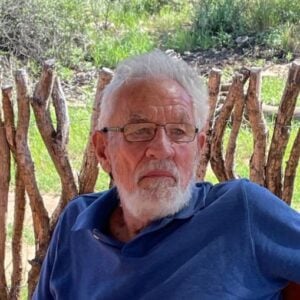
Axel Thoma conversation with Magdalena Lukas
Introduction
Axel Thoma a professional in land use, landscaping, and town planning arrived in Botswana through the German volunteer service. His task was to assess vegetation and water resources to determine if the land could be used for livestock herding, as there were plans to expand grazing areas. Due to his work in land planning, Axel came across many San communities living in the region between 1973 and 1979.
Ten years involvement at WIMSA (Working Group of Indigenous Minorities in Southern Africa)
Axel’s ten years of involvement with WIMSA (Working Group of Indigenous Minorities in Southern Africa) was marked by several key achievements, including building unity and facilitating communication among the San across borders and creating a platform for dialogue through gatherings such as the general assembly. These represented major steps in bringing together communities that had been fragmented by geographical boundaries and historical challenges.
The achievements shared reveal not only the strategic leadership of WIMSA but also its lasting impact on the San communities from Angola, Botswana, Namibia and South Africa rights, their cultural preservation, and their access to governance structures.
Axel’s reflections highlight both the milestones that WIMSA achieved and regrets about the organization’s status.
Highlights
00:03:56 – 00:08:08 - A wonderful job with no description
00:08:45 – 00:10:32 - A note from Megan Biesele
00:10:33 – 00:38:26 - The Emergence of WIMSA (Working Group of Indigenous Minorities in Southern Africa)
Four Chapters
1. 00:03:56 – 00:08:08 - A wonderful job with no description
When Axel was hired as then titled “Bushmen Development Officer” by the Botswana Ministry of Local Government & Lands, he was tasked with surveyingthe area of the Northern Kalahari District. Despite having no formal job description as a Bushmen Development Officer, he was expected to initiate development projects.
Registering sip wells
In Botswana, there was a bylaw that stated if you owned a water source, you were automatically responsible for the surrounding 5x5 km of land, based on cattle farming needs. Axel attempts to register several sip wells with the Land Board for the respective San communities were unsuccessful.
Returning to Germany
Over time, Axel found that his efforts to to assist !Xoo San communities were becoming increasingly difficult. He realized that without land rights, these communities could not thrive. Axel’s contract expired and a local successor took over. Axel and his partner Magdalena Brörmann-Thoma returned to Germany.
2. 00:08:45 – 00:10:32 - A note from Megan Biesele
In 1990, Axel was asked by anthropologist and activist Megan Biesele if he would be interested in coming to Namibia to take up the position of Co-ordinator and guide the NGO Nyae Nyae Development Foundation of Namibia (NNDFN), which was responsible for Tsumkwe and Eastern Bushmanland (now a conservancy). Among other foci Axel held numerous meetings with the Ministry of Education to ensure that minority groups, particularly the San, were properly supported in schools. His efforts were aimed at integrating their needs into the educational system and ensuring they had access to education that respected their culture and language.
3. 00:10:33 – 00:38:26 - The Emergence of WIMSA (Working Group of Indigenous Minorities in Southern Africa)
Axel with a group of San representatives from Namibia and Botswana and the Co-ordinator of the Kuru Development Trust (KDT) Braam le Roux consulted numerous San communities in Zimbabwe, Namibia, Botswana and South Africa discussing how to manage an organization across borders, facilitating development for the San. This was, however, not without its challenges.
Despite these challenges, WIMSA’s strong foundation allowed it to continue growing, and the elders played an instrumental role in ensuring its success.
4. 00:38:27 – 00:44:06 Axel concludes his interview by reflecting on the possible future of WIMSA.
Highlights
0:05:34 - Unique Aspects of San Culture (112 Seconds)
0:12:13 - Fascination With Trickster Figure (115 Seconds)
0:16:11 - Coping With Challenges Through Laughter (56 Seconds)
Three Chapters
1. (00:02) Insights into Bushman Mythology and Culture
This chapter features a conversation with retired academic Mathias Guenther, who shares his experiences working with the people of D’kar Village in the Ghanzi district since 1968 and his ongoing work on mythology and folklore. We explore with Matthias the significance of the 50th anniversary of the Kalahari People's Fund. He reflects on his fascination with hunter-gatherer societies, particularly their cosmology and the human-animal relationships evident in their stories and rituals. Mathias also highlights the remarkable sharing ethos of these communities, which starkly contrasts with Western competitive values, underscoring the unique aspects of the San culture that he has observed through decades of engagement and research.
2. (07:27) Cultural Resilience and Coping Strategies
This chapter examines the importance of preserving cultural heritage in the face of modernization, emphasizing the value of initiatives that record oral history and promote community development. We reflect on Mathias’ long-standing relationship with the Bushmen since 1968 and his research, which offers a unique lens to view Western culture and ideas. We explore the trickster figure in mythology and its role in coping with life's adversities through humour rather than despair.
3. (19:41) Farewell and Gratitude to Mathias
The episode concludes on a note of thanks and positive reinforcement for the importance of such cultural exchanges.
Highlights
0:02:12 – The KPF and personal interest in the San (132 Seconds)
0:08:15 - Women as gatherers and active participants (124 Seconds)
Three chapters
1. (00:00) KPF background and personal interest in the San
Jaqueline reflects on the origins of KPF, clarifying that while she wasn't a founder, her connections to the organization run deep through her relationship with San and Botswanan people. We explore the cultural significance and practices of the San people, focusing particularly on the professional healers and their trance dances, and the complexities of their payment practices, which blend modern professionalism with traditional generosity.
2.(05:42) Cultural Traditions and Social Practices
Jaqueline explores the profound cultural impact of communal sharing and healing practices observed among the San, highlighting the intense, collective energy that infuses their traditional dance and healing ceremonies around the fire. Jaqueline reflects on the egalitarian aspects of San society, particularly in food gathering, where women not only collect but also hunt, breaking typical gender norms. The conversation also acknowledges the contributions of the Kalahari People's Fund and individuals like John Marshall in supporting the San's ability to maintain their villages and traditions. Finally, Jaqueline addresses the challenges faced by the youth in preserving cultural traditions in modern times, stressing the importance of maintaining the underlying values of egalitarianism and community cohesion rather than reducing culture to mere artifacts or rituals.
Highlights
0:01:46 - Celebrating 50 Years of KPF (85 Seconds)
0:10:10 - Preserving Traditional Bush Skills and Practices (226 Seconds)
0:13:59 - Preservation of Healing Traditions (148 Seconds)
Three chapters
1. (00:00) Conserving Indigenous Land and Autonomy
Richard opens by reflecting on the 50th anniversary event in Canada, attended by notable speakers and celebrating the successes of the Kalahari People's Fund (KPF). We explore the transformative impact of the Nyae Nyae Conservancy in Namibia, highlighting its origins from conflicting developmental views and its pioneering role in community-based natural resource management (CBNRM) across Africa. Richard and Festus also discuss the significant influence of John Marshall in ensuring the Ju/'hoansi people's autonomy over their lands, thereby preventing external encroachment. This has, to some extent, allowed Ju/'hoansi to sustainably manage and benefit from their environment, securing their rights and livelihoods in the face of potential land invasion threats.
2. (08:06) Bushmen Traditions and Skills Today
This chapter examines the enduring hunting and survival skills of the Ju|’hoansi, reflecting on personal experiences from the 1960s and 1970s. Richard recounts how the use of hunting dogs varied between communities and he touches on the concerns regarding younger generations losing bush skills, emphasizing the need for elders to pass down this vital knowledge. We also discuss the fascinating fire-making techniques without modern tools, celebrating that these methods are still known and shared today. Furthermore, Richard highlights the cultural significance of healing dances, a practice deeply rooted in the community yet threatened by external influences, underscoring the importance of integrating such traditions into education to preserve these precious aspects of heritage.
3. (16:26) Grateful for Opportunity and Future Plans
This chapter captures the heartfelt gratitude expressed by our guest towards the unique opportunity provided by the experiment Chris and Festus put together. We explore the impact of our collaboration and the anticipation of future engagements, including a cultural program initiative that our guest hopes to implement with Chris's assistance. The conversation underscores the importance of maintaining connections and the shared enthusiasm for meeting again in July to foster the relationship that has been built. Our guest's appreciation for the work we do and the cultural considerations we keep in mind are evident throughout the discussion, as we look forward to continuing our efforts and enjoying time together in the coming summer.
Bob Hitchcock (left) and Chris Low, linking with Festus Soroab
Highlights
0:03:18 - Preserving Indigenous Knowledge and Traditions (96 Seconds)
0:08:34 - Preserving Tsumkwe culture for Future Generations (146 Seconds)
0:13:25 - Archaeology's Role in indigenous land use claims (111 Seconds)
0:21:27 - Hope for Ju|’hoansi future (124 Seconds)
0:27:02 - Global conflict management strategies (93 Seconds)
0:32:00 – The importance of an archive
0:34:58 - Heritage and tourism group funding initiatives (43 Seconds)
Four Chapters
1. (00:01) Cultural Traditions and Indigenous Knowledge
We open with a comment on the KPF celebrations and a little of Bob’s background experience among the San. Bob share insights into the rich culture, traditions, and indigenous knowledge of San, emphasizing their sustainable practices and community values. Bob recounts the history and impact of KPF, highlighting how figures like John Marshall have significantly supported the Ju|’hoansi. The unique aspects of San culture, such as healing practices and child-rearing, are touched upon, illustrating their potential to inform and enrich wider societies. Throughout, the importance of education and cultural preservation is underscored, showcasing the critical role that organizations like KPF play in supporting these communities.
2. (08:33) Preserving Tsumkwe Cultural Heritage
We explore the importance of preserving indigenous cultures in the face of modernization, focusing on the Tsumkwe San people's traditions and the challenges they face in maintaining their heritage. We discuss the efforts to educate the youth about their cultural practices, such as devil's claw collection and medicinal plant knowledge. Additionally, we examine the significant changes within indigenous communities, particularly regarding access to water and education. We also touch on the role of archaeology in supporting land claims and the value of incorporating indigenous knowledge in legal cases. Chris highlights the potential benefits of involving trained Tsumkwe archaeologists in ongoing cultural and historical conservation efforts.
3. (25:28) Lessons from Indigenous Conflict Management
In this chapter we explore the valuable lessons that can be learned from the San and other indigenous cultures, particularly in the areas of conflict management and non-violent communication strategies. We touch on the potential benefits of these approaches in the context of current global conflicts, such as those in Ukraine. The conversation also highlights the importance of preserving indigenous knowledge, including traditional healing practices and medicinal plant use, especially as they pertain to mental health issues like post-traumatic stress disorder. We discuss the challenges of disseminating this wisdom and the role of documentation and archives in safeguarding it for future generations. Additionally, ethical considerations regarding the collection and use of genetic material from indigenous populations are considered, emphasizing the imperative of community consent and rights.
4. (35:01) Cultural Heritage Funding and Collaboration
The final chapter explores exciting new initiatives that the KPF is supporting, which includes funding a Hai||om based heritage and tourism group from the Etosha region. Bob discusses their plans to engage with local communities through drama, music, and storytelling to educate and share knowledge about Ha||om people and the Ju|’hoansi.
– a beautiful chance to listen to some Ju|’hoansi language!;
“San culture was a representative of the way that all human beings lived earlier in our prehistory” (0:12:00)
Highlights
0:2:35 - Origins of KPF (394 Seconds)
0:5:58 - Origins of Nyae Nyae Conservancy ( 303 Seconds)
0:06:09 - Resisting Displacement (166 Seconds)
0:10:55 - Exploring San culture and Human Universality (130 Seconds)
0:20:34 - The Impact of Literacy in Ju|’hoan (210 Seconds)
Three chapters
1. (00:00) Helping the Kalahari People
This particularly detailed and informed chapter celebrates the 50th anniversary of the Kalahari People's Fund (KPF), reflecting on its origin and impact. Megan shares the story of how a direct request for help from a woman named !Unn/obe Morethlwa led to the formation of the KPF, highlighting the importance of literacy and communication in supporting the Ju|’hoansi people of western Ngamiland. Megan highlights the pivotal roles of individuals like John Marshall and Claire Ritchie in preventing the displacement of the Jun|’hoansi from their ancestral lands, emphasizing the community's intrinsic conservation practices and their fight against becoming marginalized in the face of threats to turn their land into a game reserve. The chapter underscores the collective efforts and ongoing commitment to ensure the rights and resources of the Kalahari people are protected and sustained.
2. (11:40) Lessons From the Ju|’hoa People
This chapter explores the rich cultural heritage and traditions of the San, emphasizing their universal human qualities rather than their uniqueness. Megan describes how their communal living, mutual respect, and sharing are vital for group survival, reflecting a long-standing human history. We also touch on the San women's role as gatherers and their extensive environmental knowledge that is crucial for their hunter-gatherer lifestyle. Furthermore, Megan explains how the San's ability to create fire using natural materials showcases their self-sufficiency and deep understanding of their surroundings. Lastly, Megan highlights the importance of literacy in preserving and sharing these valuable cultural practices and wisdom.
3. (21:02) Jun|’hoa Language Development Success
This chapter explores the incredible strides made in literacy and education among the Jun|’hoa people of Namibia, thanks to the collaboration between the Kalahari People's Fund and linguist Patrick Dickens. We discuss the development of a user-friendly writing system for the Jun|’hoa language, which has enabled quick learning and widespread adoption since Namibia's independence in 1990. This work led to the creation of a dictionary and grammar, facilitating the inclusion of the Jun|’hoa language as one of the five national languages. We also touch on the profound impact of this linguistic achievement on political, educational, and intellectual empowerment for the Jun|’hoa people, and the subsequent bridge it has built towards learning English. The chapter concludes with a heartfelt exchange of gratitude for the efforts made by those involved in the Village Schools Project, which has significantly contributed to the community's educational advancements.
Highlights
0:03:39 - Creating Culturally Representative Children's Books (71 Seconds)
0:09:45 - Gathering Food and Learning Through Experience (138 Seconds)
Two chapters
1. (00:00) Cultural Exchange and Community Support
This chapter celebrates the 50th anniversary of the KPF, highlighting the educational and community advancements they've made. We discuss the establishment of playgroups to combat high dropout rates, focusing on the integration of Western teaching methods through play, and the impact of culturally relevant books featuring Ju|’hoan children. Additionally, Melissa reflects on the invaluable lessons learned from the Ju|’hoansi regarding teaching, parenting, and friendship, emphasizing their approach to community and problem-solving. Lastly, Melissa shares her profound experiences with Ju|’hoansi healing dances and the communal and democratic nature of these events, as well as John Marshall's significant contributions to the Ju|’hoansi, particularly in the areas of village support and agricultural training.
2. (10:11) Role of Women in Food Gathering
This chapter celebrates the vital role of women as gatherers, emphasizing the deep-rooted knowledge and skills involved in foraging and sourcing food from nature. We explore the joy and educational aspects of gathering, highlighting its importance not just for survival but also as a learning experience for children and adults alike. The conversation underscores the need to integrate these traditional skills into public education, recognizing the value they hold for communities and the empowerment of women who have long been the custodians of this practice. Through this narrative, we affirm the significance of preserving and passing down the art of gathering, ensuring it remains a cherished and respected element of our cultural heritage.